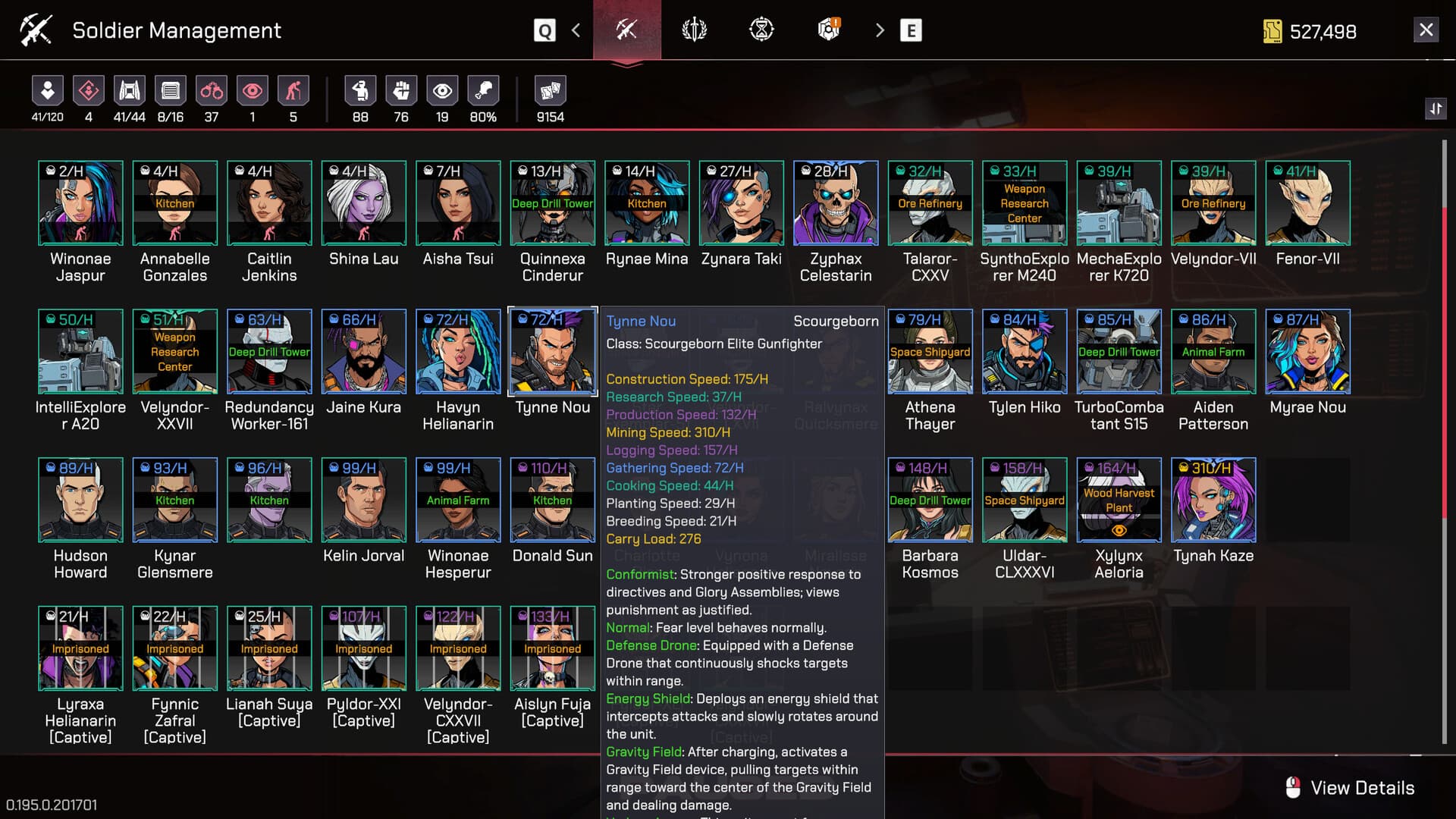
The best Pax Autocratica soldiers are the ones that complete the squad's required roles within its deployment limit and remain useful under the current AI behavior. Normal soldiers, Elites, and Chiefs trade quantity, durability, area damage, control, and slot efficiency. Build 24747486 does not provide enough controlled public testing for one permanent ranking.
There Is No Universal Best Soldier
A squad is a system. One unit may look powerful in isolation while consuming enough deployment capacity to remove two other useful bodies. Several normal soldiers may deliver more total fire and trigger quantity-oriented effects, yet an Elite may survive pressure that would quickly remove those troops. A Chief with control or area utility may solve an encounter that raw single-target output cannot.
The mission changes the answer. Open areas reward range and survivability differently from cramped routes. A capture-focused trip needs controlled damage and enough stability to isolate a target. A Boss attempt may value durable units that keep pressure away from the player. A resource run may favor dependable soldiers who require less attention while the player moves quickly.
Current community comparisons disagree because they often compare different sectors, qualities, upgrades, slot limits, and Cores. That disagreement is useful: it shows that the choice has real tradeoffs. It does not establish that normal troops always beat Elites or that rarity always wins.
Build by Role
Define roles before choosing names. A balanced squad can use a frontline or distraction element, steady single-target fire, area control, and a support or control function. The exact mix depends on what the player's own weapon already covers.
Use these role questions:
- Frontline: Which unit can absorb attention without collapsing immediately?
- Single target: Which unit stays on a priority enemy and contributes consistent pressure?
- Area control: Which unit can affect groups, drones, or crowded approaches?
- Support: Which ability improves survival, positioning, control, or recovery?
- Mobility: Which unit can keep up when the route requires frequent repositioning?
- Capture support: Which composition can weaken and isolate without accidentally ending the target?
Do not fill every slot with the same strength. Four units that all excel at stationary single-target damage can still fail when the player needs space. A rare unit with area or control utility may be worth more than its direct damage suggests when it covers the missing role.
Normal Soldiers vs Elites
Normal soldiers offer numbers. More bodies can create more firing angles, distribute incoming pressure, and interact well with Cores or strategies that reward squad size. They also allow a loss or poor position to affect a smaller share of the total deployment investment. Their value increases when the player can keep the group together and focused.
Elites and Chiefs can offer higher health, area effects, drones, control, or stronger survival. Those qualities can matter when a mission punishes fragile units or when the player needs one unit to hold an approach. The cost is often deployment capacity. A powerful unit should be compared with the full set of normal troops that could occupy the same capacity, not with one ordinary soldier.
AG-12 reduced upgrade-point requirements for normal soldiers, Elites, and Boss units. That makes older cost conclusions unreliable. It also means a comparison should include upgrade state. An unupgraded rare unit and a developed normal squad do not answer the same question.
The safe decision is conditional. Prefer numbers when extra bodies improve coverage, Core effects, and steady damage. Prefer an Elite or Chief when its specific durability, area effect, drone, or control tool solves the mission's primary risk. Reconsider when the slot cost removes a role the squad still needs.
Measure Slot Efficiency
Slot efficiency is the useful comparison unit. Record the exact deployment cost shown for each candidate in the current build, then compare squads that use the same total capacity. Specific slot costs can vary with the unit and its state, so do not rely on a number remembered from another save or patch.
For each equal-capacity squad, observe:
| Measure | Useful question |
|---|---|
| Survival | How many units remain active through the same encounter window? |
| Priority damage | Does the squad remove the dangerous target before pressure escalates? |
| Coverage | Can it engage separated or fast targets without constant correction? |
| Control | Does it create space, interrupt threats, or protect the player? |
| Recovery cost | How much fatigue, replacement, or management follows the run? |
| Player burden | How often must the player rescue positioning or target selection? |
Keep quality, upgrades, sector, difficulty, Core set, and player loadout stable. If the deployment bar or unit panel changes after an upgrade, record the before and after state. A screenshot of the current roster is more trustworthy than a universal table detached from its save.
Work With Current AI
Soldier following, positioning, target selection, control, and general behavior remain active Early Access improvement areas. That matters when evaluating a unit. Poor performance may reflect pathing or target choice rather than the intended role. A slow unit can appear weak in a route that constantly outruns it. A ranged unit can waste its advantage when blocked in a narrow lane.
Build the squad and movement plan together. Pause before a dangerous area long enough for the group to gather. Avoid pulling the formation through an unnecessarily tight approach. Use concentrated pressure when the interface and encounter allow it. Watch whether a unit repeatedly fails for the same positional reason.
Do not turn one AI failure into a permanent verdict on the soldier type. Record the route, behavior, and build. If another composition succeeds because it handles the current AI more reliably, that practical advantage is real for the present build even if raw stats suggest otherwise.
A Better Squad Review
After an expedition, review the squad before recruiting or replacing anyone. Identify which unit completed its role, which role went uncovered, and whether the player had to compensate. Compare remaining health, downs, target contribution, and positioning failures. Note whether fatigue or colony work reduced readiness before departure.
Change one variable for the next run. Replace one unit, adjust the same-capacity mix, or alter the role covered by the player's weapon. This creates a comparison instead of a completely new scenario. The Prisoner Guide explains how capture and conversion feed recruitment; this page stays focused on selection after a unit is available.
No complete current-build roster with controlled attributes and identical test conditions is available here. The responsible result is a role framework, an equal-slot method, and a clear account of present AI limitations. That gives players a decision they can repeat without pretending one rare name is always the correct squad.