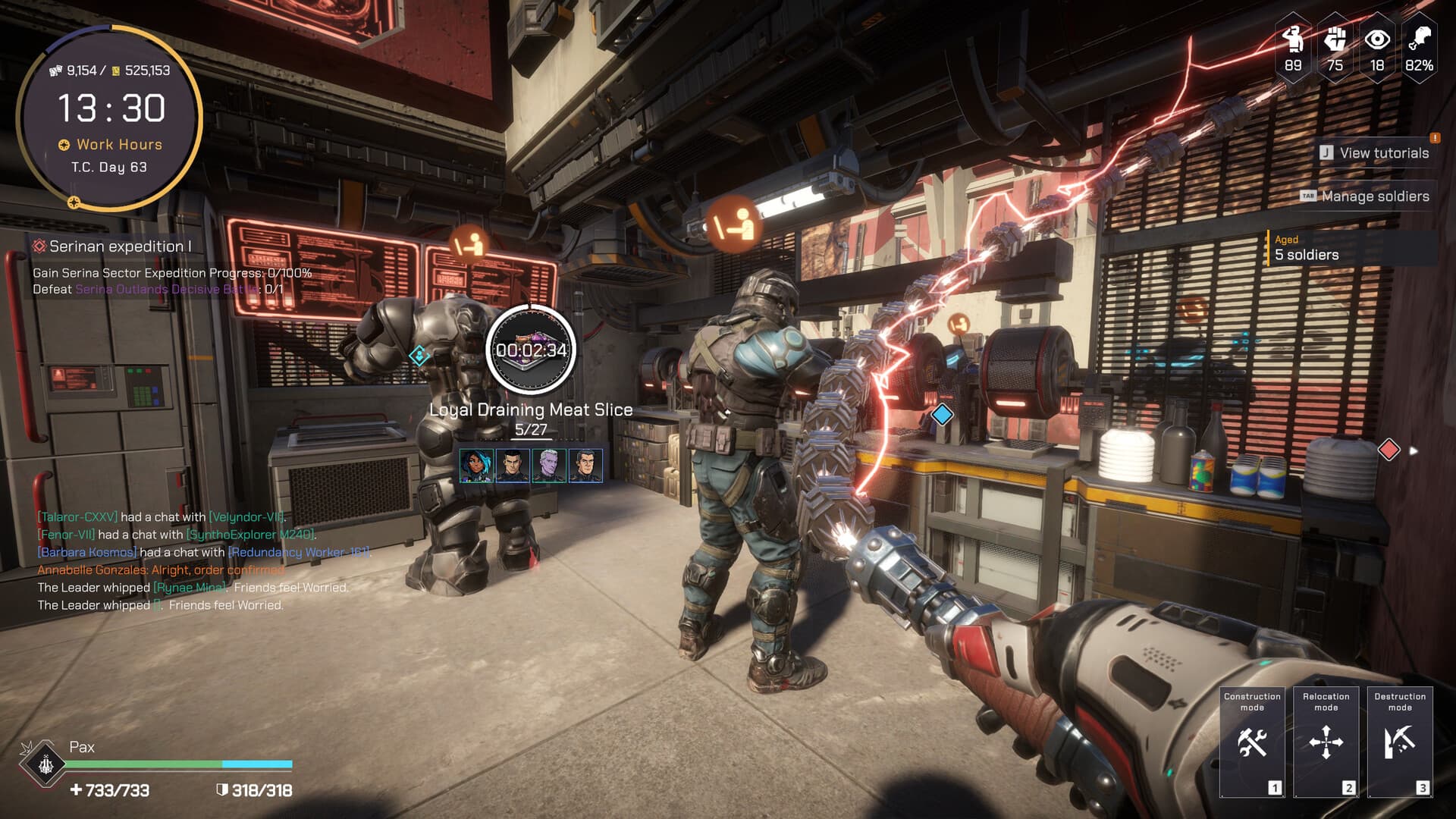
Pax Autocratica becomes much easier when the first hours are treated as a repeating operations cycle instead of a race through the research tree. Stabilize the colony, prepare one expedition with a clear purpose, return with useful gains, then repair the weak part of the system before expanding again. This guide uses Build 24747486 as its operating baseline.
The Opening Loop
Begin by reading the base as a network of people rather than a collection of structures. Check which citizens are available, which jobs are staffed, how food moves from production to consumption, and what the next expedition actually needs. A workshop with no worker is only future capacity. A kitchen producing meals does not solve hunger when the Food Hall has no usable stock. A new barracks creates room, but every additional citizen also creates food, wage, housing, and workload pressure.
Your first objective is a complete loop that can repeat without an emergency. Repair the Command Center path, start practical research, establish food production and service, provide housing, and keep enough flexible labor for hauling and construction. Do not assign every citizen permanently. A small reserve makes it possible to finish a building or move materials without shutting down another essential station.
Before adding a second production chain, watch one working cycle. Confirm that inputs arrive, the assigned citizen stays functional, output reaches storage or its destination, and no essential task remains uncovered. This short observation catches more problems than building three additional structures at once.
Stabilize Food Before Growth
Food is a chain. Production, inventory, transport, and service all have to work. A Kitchen can maintain basic food in Stock mode, while the Food Hall determines what the population can actually consume. When a colony reports food trouble despite visible production, inspect each step instead of adding another Kitchen immediately.
Use this order:
- Confirm that the Kitchen is staffed and receives its inputs.
- Check that the intended food is being produced and retained rather than consumed by another process.
- Verify that the Food Hall is configured with an available meal.
- Watch whether hauling moves the output to the required location.
- Compare the stable supply rate with the size of the population before recruiting again.
Stock mode is useful because it creates a visible buffer. The exact buffer needed depends on colony size and interruptions, so avoid treating one number as universal. The useful signal is whether the reserve recovers after a normal consumption period. If it only falls, the chain is not yet stable.
Population growth should follow food stability, not lead it. Barracks allow a larger workforce and squad pool, but capacity is not the same as support. Add people after the colony can feed its current population, then recheck the chain after each meaningful expansion.
Research and Essential Buildings
The early research path should unlock a balanced operating kit rather than chase a single impressive endpoint. Barracks support population capacity. Kitchen and Food Hall support daily survival. Prison research allows captured enemies to become a usable part of the colony instead of an unresolved return-trip problem. Tactical and equipment facilities prepare the combat side of the campaign. Victory Square eventually becomes important for Directives, including colony-wide working hours.
Treat that list as checkpoints, not a rigid build order. The right next unlock depends on the current bottleneck. If food service is failing, a weapon workshop does not solve the immediate problem. If the expedition cannot survive or carry its intended tools, another residential expansion may be premature. If prisoners are accumulating without capacity, prioritize the prison chain before spending more Capture Rounds.
Build 24747486 follows post-launch changes that shortened Prison research time and adjusted early rewards. Advice written around the older Prologue or Demo can point to real systems while still giving the wrong pace. Use the current interface and current costs in front of you, especially when an older guide claims an exact minute or mandatory first choice.
Prepare the First Expeditions
Every expedition should have a purpose before the launch button is pressed. Decide whether the trip is for resources, progression, equipment testing, or capture. That choice determines what the colony must provide and what success looks like.
Run a short departure check:
- Equip a weapon suited to the expected engagement distance.
- Carry armor and supplies that match the route rather than filling every slot at random.
- Review the squad and avoid sending exhausted citizens.
- Bring Capture Rounds only when a capture is part of the plan.
- Confirm that the Prison has usable capacity before relying on a prisoner return.
- Leave enough labor at home to keep food and essential production running.
Capture Rounds are an option, not a substitute for ordinary combat control. A target still needs to be weakened, isolated, and approached with attention to the displayed Capture Rate. The latest build also includes higher-grade Capture Rounds for tougher targets. More capable ammunition improves opportunity; it does not guarantee every Elite or Boss can be taken.
Return, Reset, and Expand
The return screen is the beginning of the next cycle. Process captured enemies, unload useful materials, replace consumed supplies, and check whether the colony kept operating during the absence. A successful firefight can still expose a base problem if food reserves collapsed or essential workers became exhausted.
Review fatigue before immediately launching again. Colony-wide work hours are changed through Victory Square, the Unified Labor research and Directive, and the final Issue Directive action. Lowering future hours does not instantly restore an already Exhausted citizen. When available, individual paid time off handles recovery while the Directive changes the ongoing schedule. The Work Schedule Guide covers that distinction in detail.
Expand only after the weak point is understood. If hauling caused delays, improve routes or assignments before placing more distant production. If prison capacity blocked a capture, solve that chain before spending on another capture-focused run. If the squad struggled, compare roles and slot use rather than replacing everyone with the rarest unit available.
Common Early Mistakes
Growing faster than food. New citizens look like an immediate solution to labor shortages, but they also increase demand. Prove the food chain can recover before adding more pressure.
Staffing every role with no reserve. Construction and hauling compete with permanent assignments. Keep enough flexibility to handle new work without disabling an essential service.
Confusing production with delivery. Materials in one building do not help another building until the transport path and assignment work. Watch movement, not only inventory totals.
Treating old guidance as a timer. Early Access patches have changed research speed, rewards, captures, upgrades, collision, and stability. Use old videos to recognize systems, then validate every button and cost in the current interface.
Leaving without a return plan. Capture attempts need prison capacity. Weapon testing needs a consistent comparison. Resource runs need a known shortage. A stated objective keeps the expedition from becoming an expensive collection of unrelated decisions.
Expanding a messy layout instead of fixing it. Reserve corridors, storage access, and future building space early. The Base Layout Guide provides a review method that works without pretending there is one perfect blueprint.