Pax Autocratica work hours are controlled by a colony-wide Directive, not by the ordinary individual assignment panel. Repair Victory Square, research Unified Labor, open Directives, select Unified Labor, adjust Daily working hours, and press Issue Directive. Changing the number without issuing the Directive does not apply the schedule.
The Exact Menu Path
The work schedule becomes available through a chain of colony progress. Victory Square must be repaired and usable. Unified Labor must be researched. The Directives interface then provides the colony-wide working-hours control.
Follow this sequence:
- Repair Victory Square if it is not already active.
- Complete the Unified Labor research.
- Open the Directives interface from Victory Square.
- Select the Unified Labor Directive.
- Set the Daily working hours value you want to test.
- Press Issue Directive to put the change into effect.
This is different from assigning one citizen to a building or changing a local work role. The Directive controls the general schedule for the colony. Individual availability, traits, fatigue, building staffing, and special policies can still affect what happens to a specific person.
When the control seems missing, check progression before assuming the interface is broken. Confirm that Victory Square is actually repaired, that Unified Labor is complete, and that you are inside Directives rather than a normal worker panel. Early Access interface changes can move labels, so follow the system names as well as the remembered screen position.
Issue the Directive
The final button matters. Editing Daily working hours prepares a policy value, but Issue Directive applies it. This distinction explains many cases where the player returns to the colony and sees no change. Reopen the Directive after issuing it and verify that the displayed active value matches the intended schedule.
Apply one schedule change at a time. If you also recruit several citizens, reassign half the base, expand food production, and begin a new construction zone, the result becomes difficult to interpret. A controlled schedule adjustment should be followed through at least one complete daily cycle while the rest of the colony remains reasonably stable.
Watch the right signals. A lower schedule should reduce ongoing workload pressure, but it also reduces the time available for production and hauling. The goal is not the smallest number. It is a sustainable balance where essential services remain covered and citizens do not repeatedly become Overworked or Exhausted.
Recover Exhausted Citizens
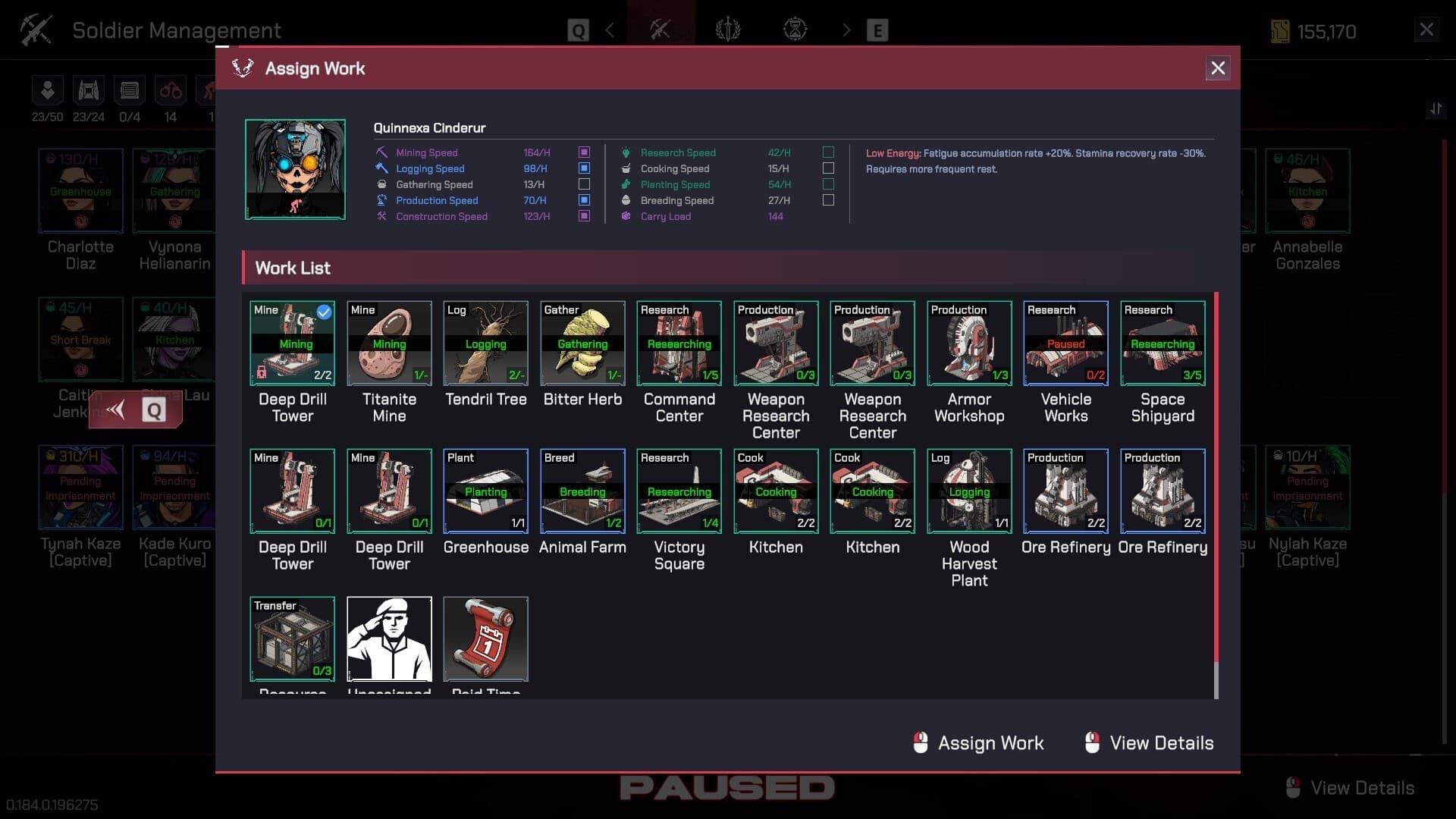
Changing Unified Labor affects future working time. It does not instantly restore a citizen who is already Exhausted. That person may continue to be unavailable or ineffective until recovery occurs. When the relevant policy is unlocked, 24h Paid Time Off can be used as an individual recovery action.
Think of the two controls as separate tools:
- Unified Labor changes the ongoing colony-wide schedule.
- 24h Paid Time Off addresses the immediate recovery need of one citizen.
If many people repeatedly become exhausted, individual leave treats the symptoms but not the operating cause. Reduce workload, adjust the Directive, review food and transport delays, or recruit enough staff to cover the real demand. If only one person is affected after an unusual task, targeted recovery may be enough.
Do not assume that an idle-looking citizen is rested or that an assigned citizen is actively productive. Open the individual state and the building assignment, then observe the work cycle. The status is more useful than a brief visual pause.
Choose a Testing Range
Players commonly experiment around 14 to 16 daily working hours after finding a longer schedule unsustainable. That range is a testing starting point, not an official optimum. A colony with different food, traits, roles, travel distances, pressure policies, and population can respond differently.
Avoid declaring 15 hours universally best. Instead, start from the current failure. If 20 hours repeatedly produces Overworked citizens, reduce the schedule by a meaningful step, issue the Directive, and observe a full cycle. If essential work then falls behind, determine whether the problem is the schedule itself or an inefficient assignment and hauling layout.
Use a written comparison:
| Check | Before change | After one cycle |
|---|---|---|
| Overworked or Exhausted count | Record current state | Record at the same time next cycle |
| Food reserve | Rising, stable, or falling | Compare the same direction |
| Essential staffing | Covered or uncovered | Note gaps and their duration |
| Construction and hauling | Normal or delayed | Note whether queues recover |
| Expedition readiness | Available or fatigued | Compare the intended squad |
The table turns a favorite number into an operating decision. If the colony remains stable, keep observing before changing again.
Diagnose the Real Bottleneck
Separate fatigue from capacity. When a job has an assigned citizen who repeatedly becomes exhausted, work hours and recovery are the first checks. When a critical job has nobody available to assign, the colony may have a workforce-capacity problem. Reducing hours can protect people, but it cannot create another worker.
Also inspect transport. A Kitchen worker may look unproductive because inputs never arrive. A workshop may remain idle because the output area is blocked or its materials sit across the base. Extending work hours often makes these problems worse by increasing pressure without fixing the route.
High Pressure Labor and other policy choices can change the context. Do not mix an old direct-gathering interface description with the current Directive path. Record the Build ID whenever a button, prerequisite, or effect differs from what is described here.
Use the Base Layout Guide when walking distance and hauling are the visible problem. Use the Beginner Guide when the colony expanded before food, housing, and flexible labor were stable.
Run a Safe Labor Test
Choose one calm cycle. Finish or pause unnecessary construction, make sure food service has a buffer, and avoid launching the intended test squad. Record the current schedule and the citizens already carrying fatigue states. Change Daily working hours, press Issue Directive, and let the colony complete a full cycle.
At the end, compare fatigue, food, staffing, queues, and expedition readiness. Use individual paid time off for citizens who still need recovery. Keep the new schedule for another cycle when the first result is mixed; some effects are delayed by an already damaged state.
If fatigue falls but production collapses, do not immediately return to the longest schedule. Review assignments, paths, and unnecessary work. If production remains stable and people recover, the lower schedule is a stronger operating baseline for that colony. The correct number is the one your current system can sustain, not a permanent value copied from another save.